
8/6
Plant-Based Leaders | Kemvera

Kemvera Looks to Corn, and the Midwest, to Build the Future of Biobased Chemicals
Kemvera is making essential chemicals from corn to replace petroleum, while helping establish the Midwest as a center for chemical manufacturing.
PBPC spoke with Kemvera CEO Chern-Hooi Lim and COO Brent Cutcliffe about the company’s technology, its drop-in chemicals, its plans to locate production beside ethanol plants and what it all means for farmers and Midwestern communities.

Chern-Hooi Lim, CEO, Kemvera

Brent Cutcliffe, COO, Kemvera
Q
How would you describe Kemvera’s mission?
A
Chern-Hooi Lim: Our mission is simple: to make sustainable chemicals from corn and not petroleum. Our chemicals are drop-in solutions that enable customers to differentiate their products and achieve decarbonization goals without compromising performance or requiring additional CAPEX.
Q
You have talked about helping make the Midwest a chemical manufacturing hub. Why does the region make sense?
A
Lim: Today, acetic acid is largely shipped from the U.S. Gulf Coast. Customers have dealt with supply disruptions caused by hurricanes, winter storms, feedstock constraints and geopolitical events, all contributing to price volatility.
We kept asking: How can we serve customers better? How can we make supply chains shorter and more local?
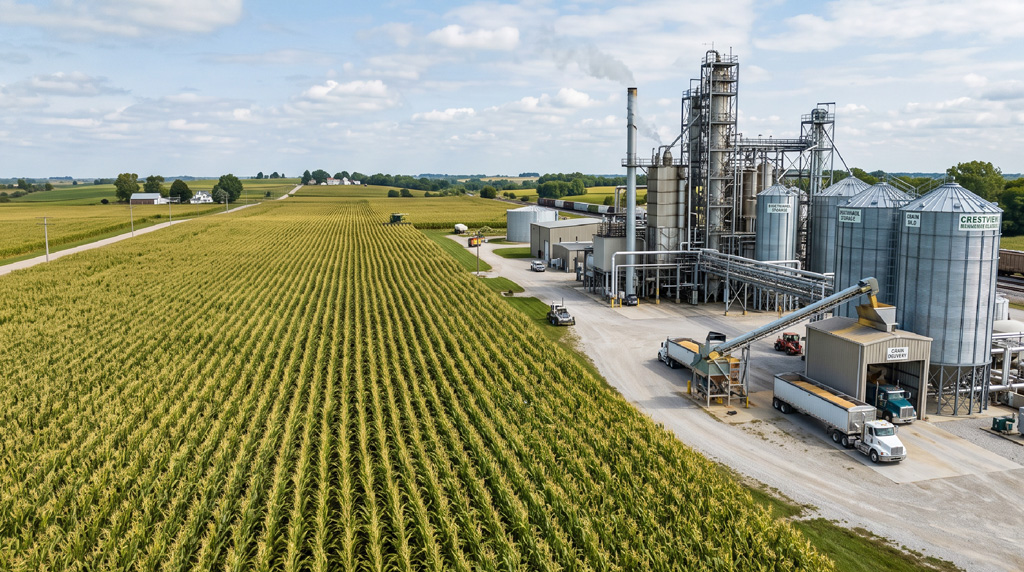
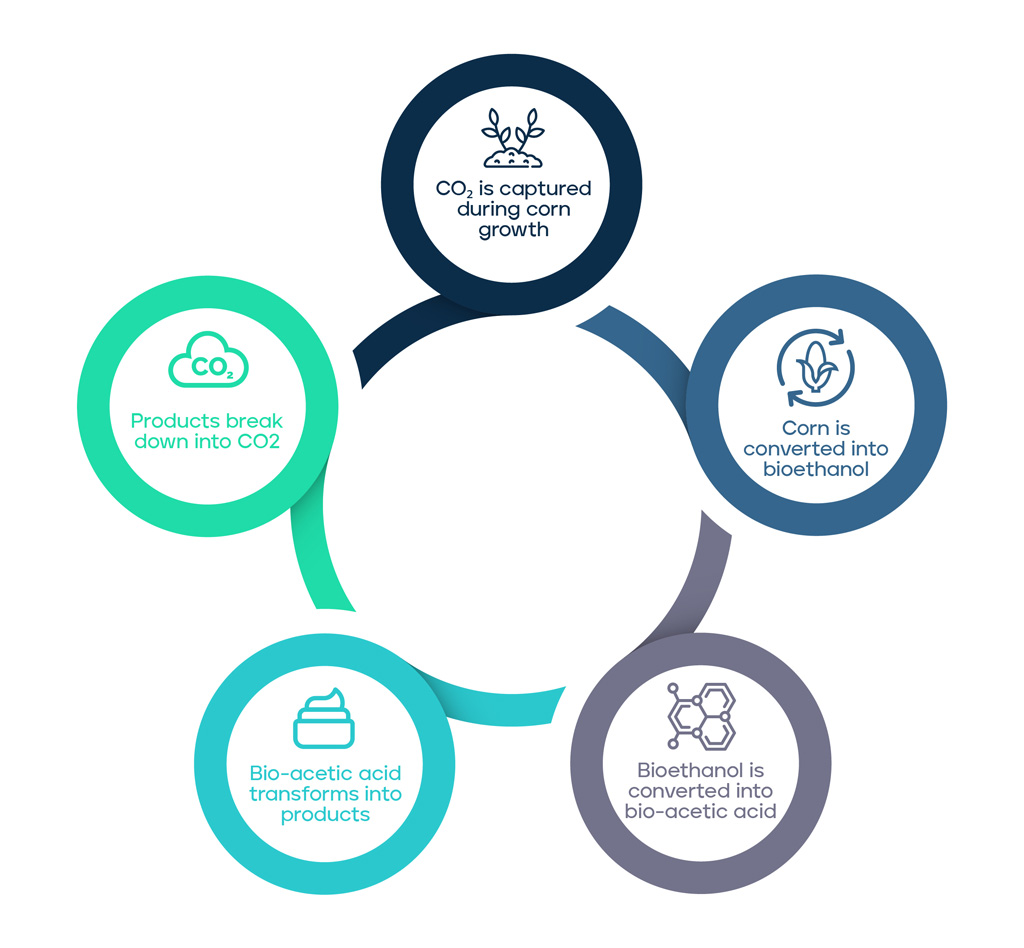
The Midwest already has the feedstock and infrastructure, along with many of the customers. Corn is converted into ethanol, and our technology converts that ethanol into bio-acetic acid. By producing it closer to the feedstock and end users, we can offer a more resilient source of supply and create more economic activity in the region.
Brent Cutcliffe: We still live in a material world. We need shoes, paint, adhesives, food ingredients and pharmaceuticals. Those products require chemicals. The Midwest has the raw materials and industrial base to produce more of those chemicals locally.
Q
What is acetic acid, and where do people encounter products made from it?
A
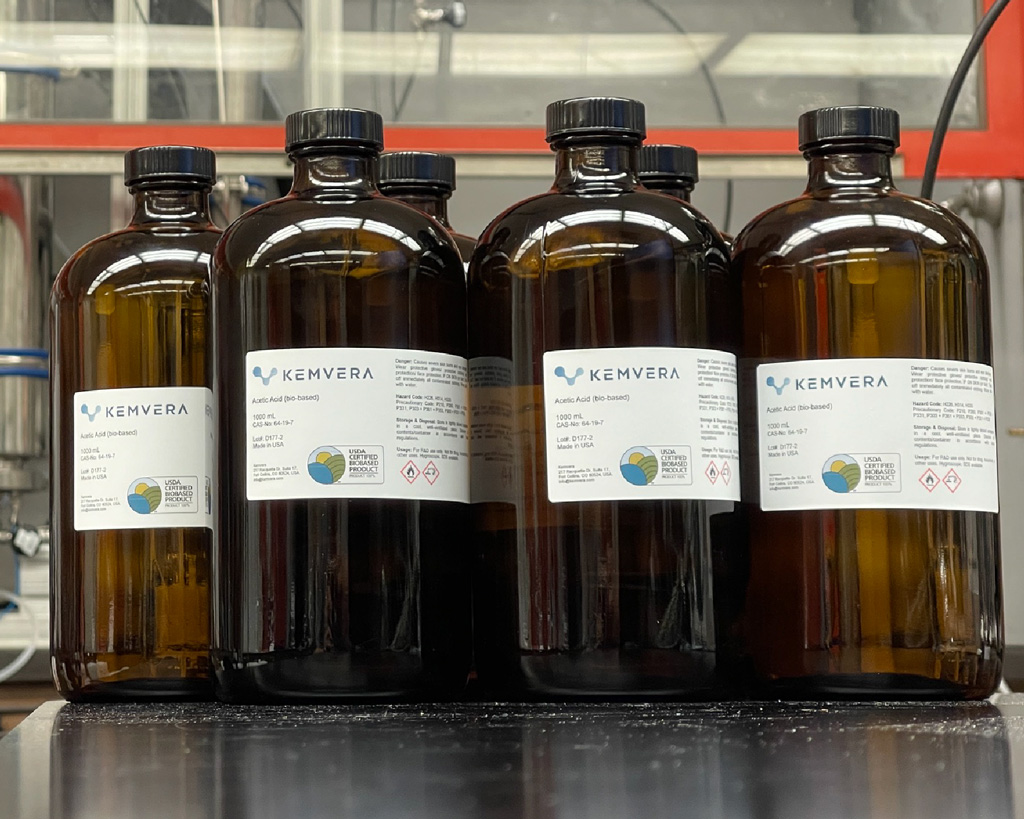
Lim: Acetic acid is a versatile chemical building block.
One of our first markets involves converting biobased acetic acid into peracetic acid, a potent disinfectant used, for example, in hospitals and other commercial and industrial settings.
Acetic acid also goes into products people use every day. A pair of Crocs, for example, contains roughly 20% acetic acid by weight.
Polyvinyl acetate, or PVA, in paint is another good example.
Cutcliffe: It also has pharmaceutical uses. Sodium acetate can serve as a buffering solution in dialysis. It is a foundational chemical used in many industries.

Q
What about biobased ethyl acetate, which Kemvera also produces?
A
Lim: Ethyl acetate is a solvent with a smell many people recognize when they open a bottle of nail polish. It is often the first ingredient listed.
Ethyl acetate is widely used in pharmaceutical production because it has good solvent properties. It is also used in inks and adhesives. The solvent evaporates as the ink or adhesive dries.
Q
Why is it important that your products can replace petroleum-based chemicals without changing how customers use them?
A
Cutcliffe: Adoption must be easy. A drop-in replacement must meet the same specifications and perform the same way in an existing process.
The shoe must still support your feet. The paint still bonds to the surface. The nail polish applies properly. Sustainability matters, but the product must meet performance standards.
Lim: We set stringent specifications so our products match or exceed their petroleum-based counterparts.
Plant-based products also avoid certain impurities that arise through oil and gas processing. Customers testing our products have reported lower amounts of trace metals. Measured in parts per million or parts per billion, they can interfere with a customer’s product or disrupt a catalyst during production.
Q
How does Kemvera’s one-step process work?
A
Lim: In chemical engineering, simpler is usually better. If you can make cookies in one step instead of five, you would typically choose one step. The same principle applies here.
Our process converts ethanol to acetic acid in a single oxidation step. That means only one reactor and one purification process to reach the finished product.
Cutcliffe: The practical benefit is lower cost. We believe ours is the lowest-cost process for converting ethanol into acetic acid.
Q
Why do you plan to locate production next to ethanol plants?
A
Lim: It creates a win-win relationship. Ethanol producers can use surplus capacity, process more corn and turn ethanol into higher-value chemicals.
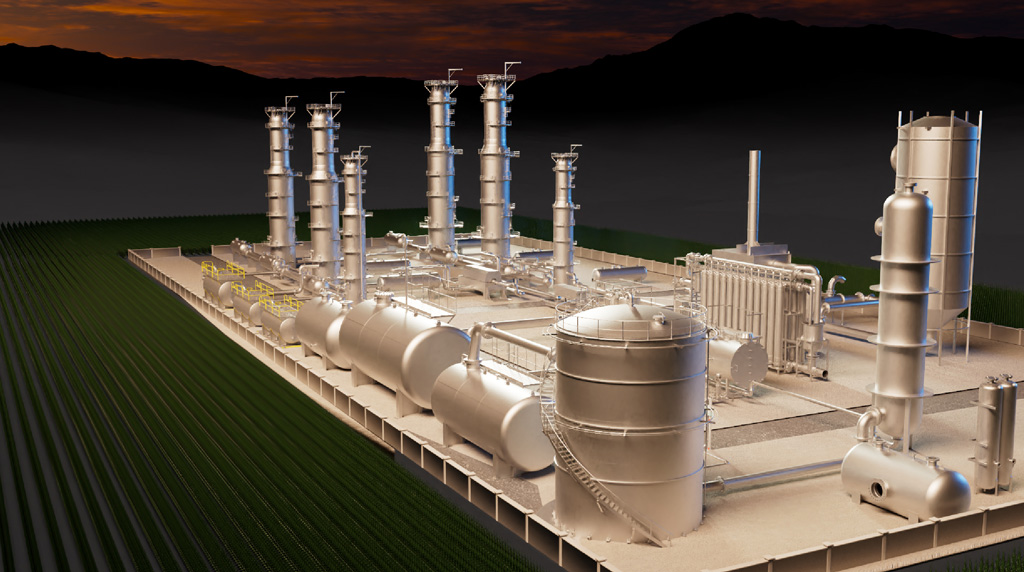
By building a bolt-on facility co-located with an ethanol plant, both parties can share infrastructure, labor and utilities.
Ethanol plants use significant amounts of steam in their purification process, and our process produces excess steam. They can provide us with ethanol, and we can provide them with steam lowering costs for both sides.
The opportunity to co-locate includes major ethanol producers and independent and farmer-owned mills. Dry mills are particularly relevant because they were designed to produce fuel ethanol and many are looking to diversify the markets for their products.
Q
What could this mean for farmers and Midwestern communities?
A
Cutcliffe: It creates another source of demand for corn and ethanol. When corn prices fall or ethanol production exceeds demand, technologies like ours can help use that supply and turn it into other products. And more of that value can remain in the Midwest.
Lim: It also creates jobs. Building and operating chemical facilities requires welders, fabricators, electricians, engineers and plant operators. These facilities run 24 hours a day.

Q
What is the path from your current pilot operation to commercial production?
A
Lim: Each step is intended to reduce engineering risk before we build a full commercial facility.
Our demonstration plant will have a capacity of 500 tons per year. From there, the commercial design would reach 50,000 tons per year using two reactor trains.
Q
What types of investors are you hoping to attract?
A
Cutcliffe: There is still technical and commercial work to complete before traditional project financing becomes available, so venture investment is important at this point.
That could include venture firms, family offices, industrial investors or farmers and agricultural groups. Midwest investors often want to see their money put to work near their own communities.
Lim: Our message resonates in the Midwest because people understand the importance of making physical products. Artificial intelligence attracts a great deal of investment, but AI cannot produce paint for your wall.
For investors, our company offers an opportunity to support domestic production while strengthening supply chains and reducing emissions. It is also an opportunity to put money into facilities and jobs in the Midwest.
Q
What policies would help companies like Kemvera reach commercial production?
A
Lim: At the state level, Iowa has been progressive in supporting biobased manufacturing. Its tax credit provides five cents per pound for qualifying production.
Cutcliffe: At the federal level, two proposed initiatives would be especially helpful. One is a tax credit of 10 cents per pound of qualified biobased products, or roughly $200 per ton.
The second is improving the USDA Section 9003 program. It has traditionally focused on loan guarantees for commercial facilities, but there is now growing momentum for adding grants for demonstration facilities.
Many promising biobased technologies get stuck in the “valley of death” between pilot and a commercial facility. A company must prove the technology at the demonstration stage, but raising the additional funding is difficult. A grant program could help companies get over that hurdle.
Q
Why did Kemvera join PBPC, and what stood out during its Washington, D.C., fly-in?
A
Cutcliffe: It comes down to engagement and advocacy with key decision makers. PBPC has frequent meaningful interaction with Congress, including members of the House and Senate and the staff supporting the committee process.
Washington can be a difficult place to navigate. PBPC understands how to get the message in front of the right people and then continue those conversations. That is what stood out to us during the fly-in.

Washington can be a difficult place to navigate. PBPC understands how to get the message in front of the right people and then continue those conversations.
Q
What would success look like for Kemvera in five to 10 years?
A
Lim: Success means producing at a much greater scale. A 50,000-ton-per-year commercial operation is still a drop in the bucket compared with a global acetic acid market of roughly 20 million tons.
Our goal is to become the leading process for producing acetic acid using biobased feedstocks instead of petroleum. Our initial target is 1 million tons within 10 years, representing about 5% of the market.
Sustainability may attract the first customers, but the opportunity goes beyond that. Customers also care about reliable supply and cost. Producing closer to the feedstock and the customer helps both.
Cutcliffe: Consumer demand matters too. And PBPC’s research shows that Americans view biobased products very positively: nearly 90% say they are interested in products and materials made from plants. When consumers choose plant-based products, manufacturers hear that message. It moves through the supply chain to the companies making the underlying materials, who then turn to companies like us for solutions.
Join our growing group of plant-based leaders working toward a more sustainable economy. Learn more about the benefits of PBPC membership.