
4/10
USDA BioPreferred Program Drives Rural Economic Growth and Expands Markets for Biobased Products

According to small businesses and innovative companies, USDA’s BioPreferred Program has been a cornerstone of economic growth and agricultural support in America’s heartland.
The program has opened new markets and delivered new growth for the certified companies that are creating and producing innovative products from agricultural feedstocks.
These companies made clear that instability in the USDA program will have significant economic consequences, not just for their bottom lines, but for their rural economies and local farmers.
Expanding Markets for Agricultural Feedstocks
The BioPreferred Program has significantly increased demand for renewable, agricultural feedstocks such as corn, soy, and hemp.
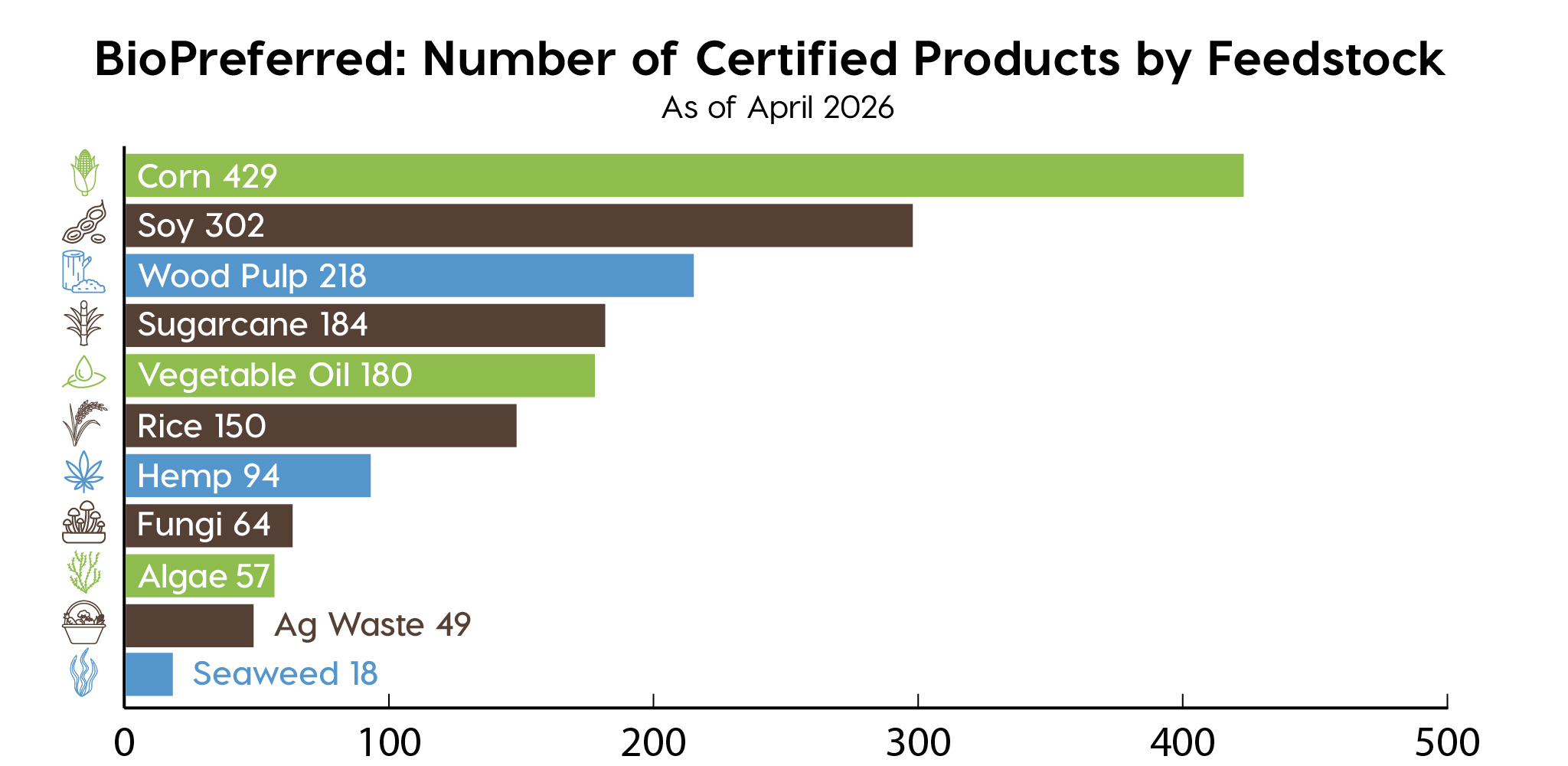
Corn grown by America’s farmers is among the most popular feedstocks on the BioPreferred Program’s database of biobased products. Today, corn-based inputs are used in products ranging from:
- Biobased tableware and packaging
- Engine oils and lubricants
- Cleaners and personal care items
- Alternative materials like imitation leather
This diversity highlights how American companies are transforming traditional crops into high-value, sustainable materials and products.



Certification That Levels the Playing Field
For plant-based product companies, BioPreferred certification is a competitive differentiator in a global marketplace.
Gregory Wilson, CEO of HempWood, notes that his factory in Murray, Kentucky, sources hemp within a 100 miles and soy within 500-miles. His American-made HempWood flooring is competitive with domestic oak, but more expensive than imported oak or bamboo flooring from Asia.
“As a country, we have a choice to make of what you want to support. I pay farmers fairly for the crops they grow, and pay my workers good wages, and that’s what I have chosen,” he said.
“Losing the BioPreferred Program will make that much more difficult, ceding advantages to flooring manufacturers in Vietnam and elsewhere, where they coat their products with hazardous chemicals, rather than using natural ingredients, such as soy,” he added.
“The BioPreferred program was a significant accreditation for us. It created an important contrast and separated us from companies that utilize synthetic inputs,” explained Wilson. “That reinforces the narrative we share with clients, emphasizing that our products are healthy and natural.”
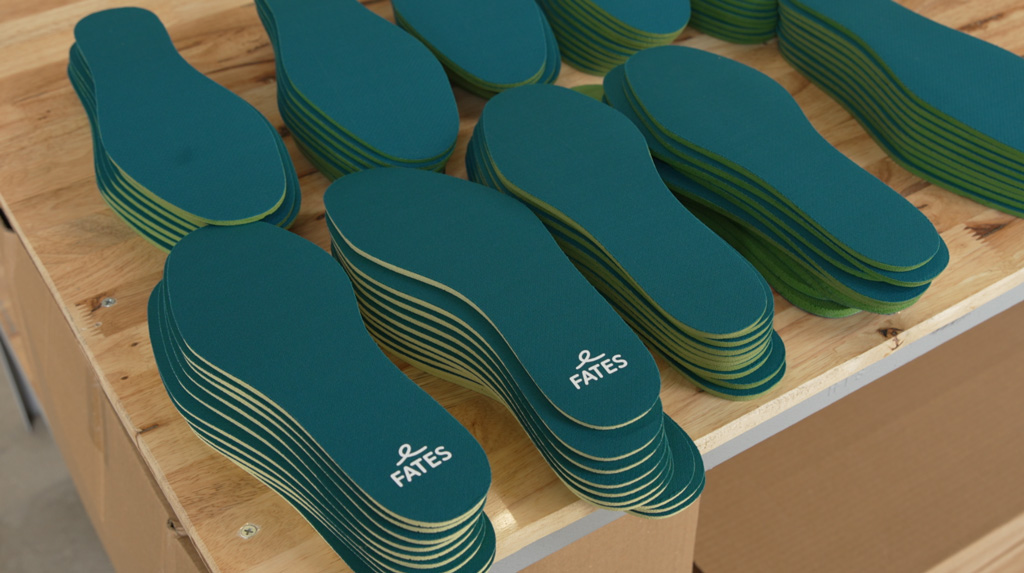
Evoco is another innovative bioproducts company. One of Evoco’s leading products is its high-performance Bio-Foams, which are found in more than 20 footwear brands, including Vans and Timberland.
Evoco notes USDA’s BioPreferred certification offers the company critical validation as it meets with downstream customers such as footwear manufacturers. The certification opens doors and sparks discussions about the advantages of being biobased.
“USDA’s certification helped de-risk early conversations with potential customers and strengthened qualification discussions,” explained Jason Robinson, the CEO of Evoco.
BedInABox®, a U.S. mattress manufacturer, developed the EcoLux® mattress using plant-based inputs for its foams, fabrics and other components. The company was the first in its industry to secure BioPreferred certification for a complete mattress, rather than a single component. The company views its BioPreferred certified product as part of a broader consumer trend toward sustainability.
“For us, the main benefit of the certification has been that we can show a commitment to sustainability and renewable materials. It demonstrates that, as a brand, we’re committed to offering the public a sustainable option. With the support of the BioPreferred certification, I can see a world, perhaps five years from now, where our EcoLux® mattress model is driving the majority of our business,” said BedInABox®’s Chris Bradley.
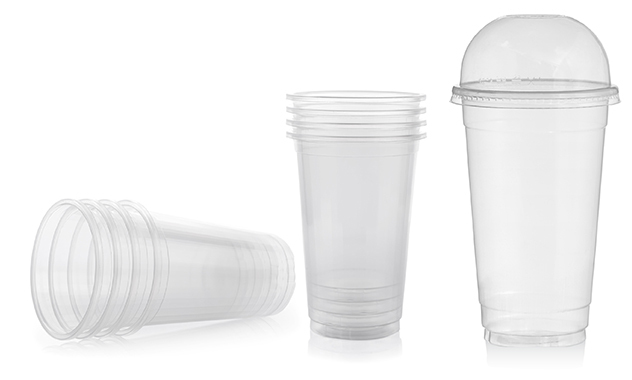
BioLogiQ is yet another company that supports the USDA BioPreferred Program. BioLogiQ makes several plant-based biopolymer resins that manufacturers use to make products more planet-friendly and to reduce pollution from fossil-based resins. The company’s biobased resins are used to make everything from bioplastic films to cups, cutlery, toys, pallets, or custom-designed plastic parts.
“Being recognized by the USDA as a 100% biobased product helps with our efforts to reduce global material usage and greenhouse gas emissions,” BioLogiQ President Steve Sherman said. “It also helps promote circularity and supports our farmers… Importantly, our customers are now able to share the fact that they, too, are using biobased products.”
Green Boom, which produces plant-based oil spill cleanup solutions, said certification played a critical role in expanding its reach. The company uses agricultural byproducts refined through a patented process to create biodegradable absorbent materials that replace plastic-based alternatives.
“The BioPreferred certification was critical for Green Boom in establishing distribution agreements with Grainger, Home Depot, and NAPA Auto Parts,” said Green Boom VP of Operations, Parker Pruett. The front page of the company’s website references USDA or BioPreferred five times as it explains the benefits of its product.
The Power of the USDA Mark
“Those retail partners handle final sales, and a major part of that partner onboarding is educating them on BioPreferred certification and its advantages,” continued Pruett.
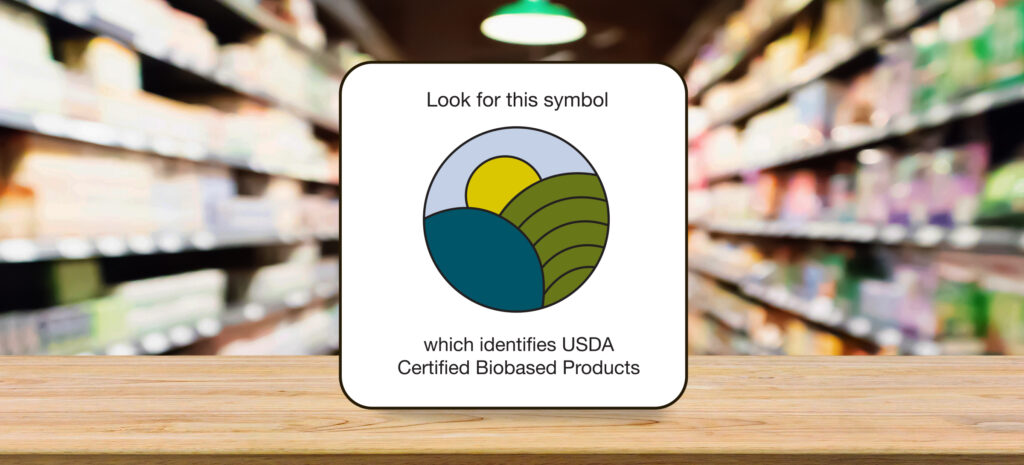
In fact, the USDA BioPreferred seal is an essential part of the story for many of these companies as they communicate with potential and existing clients to differentiate themselves in the marketplace.
The USDA label serves as a trusted signal for buyers:
- Validates sustainability claims
- Builds credibility with procurement teams
- Differentiates products in competitive categories
Evoco CEO Jason Robinson said, “Several large footwear brands, both in workwear and lifestyle, have cited our USDA biobased product certifications as a positive factor in their internal reviews, particularly when comparing biobased sourcing options.”
“The USDA BioPreferred Program has undeniably strengthened the legitimacy of our offering in early technical and sustainability evaluations,” Robinson added. “It validates our use of renewable, agriculture-derived feedstocks and reinforces confidence across the value chain that sustainability and high performance can go hand in hand.”
HempWood’s Wilson concurred, saying, “It has been a differentiator that has definitely helped us with clients, especially when coupled with our Made in America and Grown in America messaging. The certification is looked upon very favorably by our potential clients, especially the largest corporates, not only because we use hemp, but because we use soy as our adhesive.”
“I put the BioPreferred stamp on everything. It’s on all of our marketing materials, because it reinforces our story of being the only company in our sector creating all-natural products,” he added.
Wilson says his business based in rural Kentucky could not have gained access to the Fortune 500 companies without the help of the BioPreferred Program. USDA’s program and branding has earned his company contracts with Target, BMW and Patagonia – companies that have sought natural, environmentally friendly flooring, furniture, displays, and accents to emphasize products’ ties to nature.
For BedInABox®, the seal carries weight in consumer-facing markets.
“When you’re consumer-facing in e-commerce, you have maybe 15 to 30 seconds to make an impact. Having that seal, immediately communicates something meaningful to the customer,” remarked Bradley.
“From a marketing standpoint, having that BioPreferred mark, and the fact that it’s on a government-supported website, gives you automatic credibility. The federal government’s backing shows there is real credibility in the certification that supports the label,” Bradley added.
The impact of certification extends beyond branding to distribution and procurement channels.
Driving Revenue and Creating Jobs, On and Off the Farm
The BioPreferred Program generates new business opportunities for many of the participating companies and supports local farmers who are supplying the necessary feedstocks.
“We’ve examined a number of plant-based materials for our mattresses, including soy. There’s a massive soy industry in the United States, much of which is produced by American farmers. The US is a net exporter of many of these materials, and there’s a desire to increase the domestic usage of soy. Our soy consumption of renewable materials for our products has come from American farmers, and that was important to us from the beginning,” added Bradley.
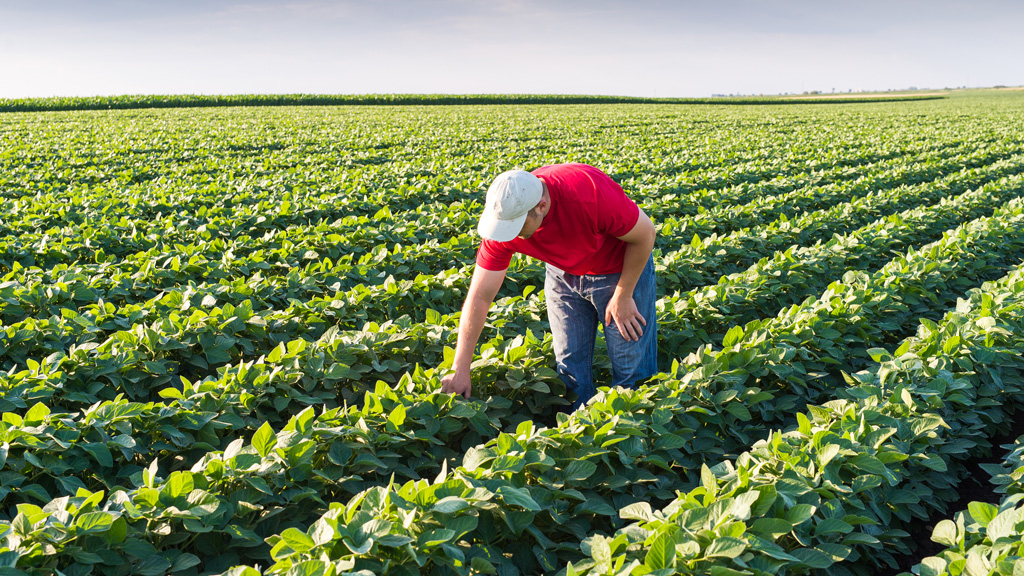
“I know every one of my hemp farmers personally,” said HempWood’s Wilson. “These guys are part of my community and they rely on us. Our soy, too, comes entirely from farms in the mid-west.”
“The USDA BioPreferred Program has, on its own, generated inbound interest from companies seeking credible, high-performance materials with verified renewable content,” said Evoco’s Robinson. “It has absolutely played a role in opening doors and accelerating trust, especially with new partners evaluating biobased alternatives for the first time.”
Green Boom localizes its sourcing of American farm products to reduce carbon footprint and strengthen agricultural supply chains.
“As part of our mission is to minimize our carbon footprint, we localize material sourcing to the greatest extent possible. Much of our source material are actually byproducts from American farms,” remarked Pruett.
With Green Boom’s support, farm byproducts become a new revenue stream — and eventually, the company’s products return to farms in a more sustainable form.
“Once our products are used and properly remediated, they return to the American bioeconomy as soil amendments,” added Pruett.
America’s Global Leadership in Transparent Certification
USDA’s BioPreferred Program also provides American leadership in an important and evolving field, where global standards are developing and where the USDA mark commands international credibility.
“USDA’s BioPreferred even served as biodegradability validation for our distribution partners in Canada,” added Green Boom’s Pruett.
Other program participants make clear that the BioPreferred Program provides internationally respected credentials that have helped in securing additional contracts overseas and in one case boosting revenue in 2024 by 20%.
USDA was among the first to offer such credentials, contributing to America’s early ag bioeconomy leadership that has been jeopardized by robust foreign investment.
BioLogiQ noted that without the USDA BioPreferred Program, the global manufacturing industry is likely to turn to other nation’s standard-setting bodies, including those in Europe, Japan, Korea and Taiwan, one of which could emerge as the dominant global benchmark.
But the U.S. federal government offers a credibility that is unmatched.
“The BioPreferred program announces to my customers that the US government certifies the percentage of our product that is plant-based – losing that support would hurt my business, my community, and my local farmers,” said Wilson.
Why the BioPreferred Program Matters
From farm to finished product, the USDA BioPreferred Program connects:
- American farmers
- Domestic manufacturers
- Global markets
It drives innovation, supports rural economies, and accelerates the transition to sustainable materials.
As companies across industries continue to invest in biobased solutions, maintaining a stable and credible certification program will be essential to preserving U.S. competitiveness—and ensuring continued growth across the agricultural supply chain.